Please prepare 60-90 seconds (or 32 bars) of a song from Musical Theatre repertoire and a 60-90 second monologue. The song selection should demonstrate engaged storytelling performed with proficient pitch, tone, diction and vocal clarity. The monologue selection should demonstrate a connection to the character’s emotional life, clear physical choices and a solid understanding of the text.
All songs and monologues must be prepared and performed in English.
If you are auditioning on-campus (NY & LA), you will be using a provided accompanist and piano to perform your audition. Please prepare and bring sheet music for the accompanist. MusicNotes and SheetMusicDirect are the best online sources for finding published sheet music.
For all other auditions, including national and international, please bring your music on a personal device that can connect to speakers via Bluetooth or audio cable. Pianotrax is a great resource for piano instrumentals or creating custom piano tracks. YouTube is also a great resource for finding backing tracks.
Select a song from Musical Theatre or Pop/Contemporary repertoire and carefully acquire the correct sheet music or audio file. More information on how to select a song
Select an age-appropriate monologue for which you feel a personal connection. More information on how to select a monologue
Research your material. Familiarize yourself with the show your song is pulled from and read the material from which your monologue selection is sourced.
Identify the characters' environments and to whom each character is speaking.
Choose an appropriate performance focus for each piece (where the person to whom your character is speaking is located)
Schedule a time to run through your music with an accompanist prior to the audition (if auditioning on-campus or at an Audition Plus event). If possible, seek the support of theatre teachers, directors or coaches.
Memorize the material until you have full command of the music and text.
The AMDA audition representative sitting behind the table in the Audition Room is called an AMDA “audition coach.” They are there to support you through the audition process and make a recommendation regarding your AMDA program of study.
Your audition begins immediately upon your entrance to the audition room and continues until you exit.
Upon entering the audition room, greet your audition coach and head directly to the accompanist (if applicable). If you are using a music track, you may approach the desk to connect your phone to the speakers. Afterwards, proceed to the center of the audition room and await instructions from your audition coach.
Be prepared to introduce yourself with your name, age, city/country of residence, and the program and campus for which you are auditioning. You will also introduce the selections you will be presenting. Please state the title of the song you will be presenting, the show or album it is sourced from and the composer/lyricist. For your monologue, please introduce the character’s name, play and the author.
Start with your song. After you finish your song, take a moment to refocus, and when you are ready, proceed with your monologue. Hold the last moment of your monologue for a beat, then restore to neutral and wait for a response from the audition coach before you leave the room, even if it is just a “thank you.”
After you finish, hold the last moment of your piece for a beat, then restore to neutral and wait for direction from your audition coach.
Be prepared to take an adjustment from your audition coach. Your coach may want to work with you on one or both of your pieces. You may also be asked questions about the show/play, the scene, or the character presented in the song/monologue.
Plan to articulate why you are auditioning for AMDA and why you want to pursue training in the performing arts. This is an opportunity to express your passion and your professional goals. Thank all panelist(s) (i.e. coach, pianist etc.) before exiting the audition room.
Present strong, effective posture and vocal clarity.
Enter and leave with confidence (i.e. keep your head up, avoid looking at the floor).
Maintain eye contact with your audition coach for the introduction/slate and feedback portions of your audition.
For your song and monologue, choose a specific “performance focus” above or slightly to the right or left of the audition table and audition coach.
Do not use props or costumes other than the chair that is provided.
You may be asked if you have additional material prepared. It never hurts to rehearse and prepare an additional song and/or monologue, in order to show another side of your skills, range, and/or abilities.
Please look your best, but remain comfortable. Clothing and footwear should allow for natural movement and not distract from your performance. Long hair or bangs should be pulled back and away from the face. Please remove all jewelry before auditioning.
Prior to the start of your audition, you will do a quick run-through of your song with the accompanist provided by AMDA. You must prepare your sheet music for this accompanist before you arrive at your audition:
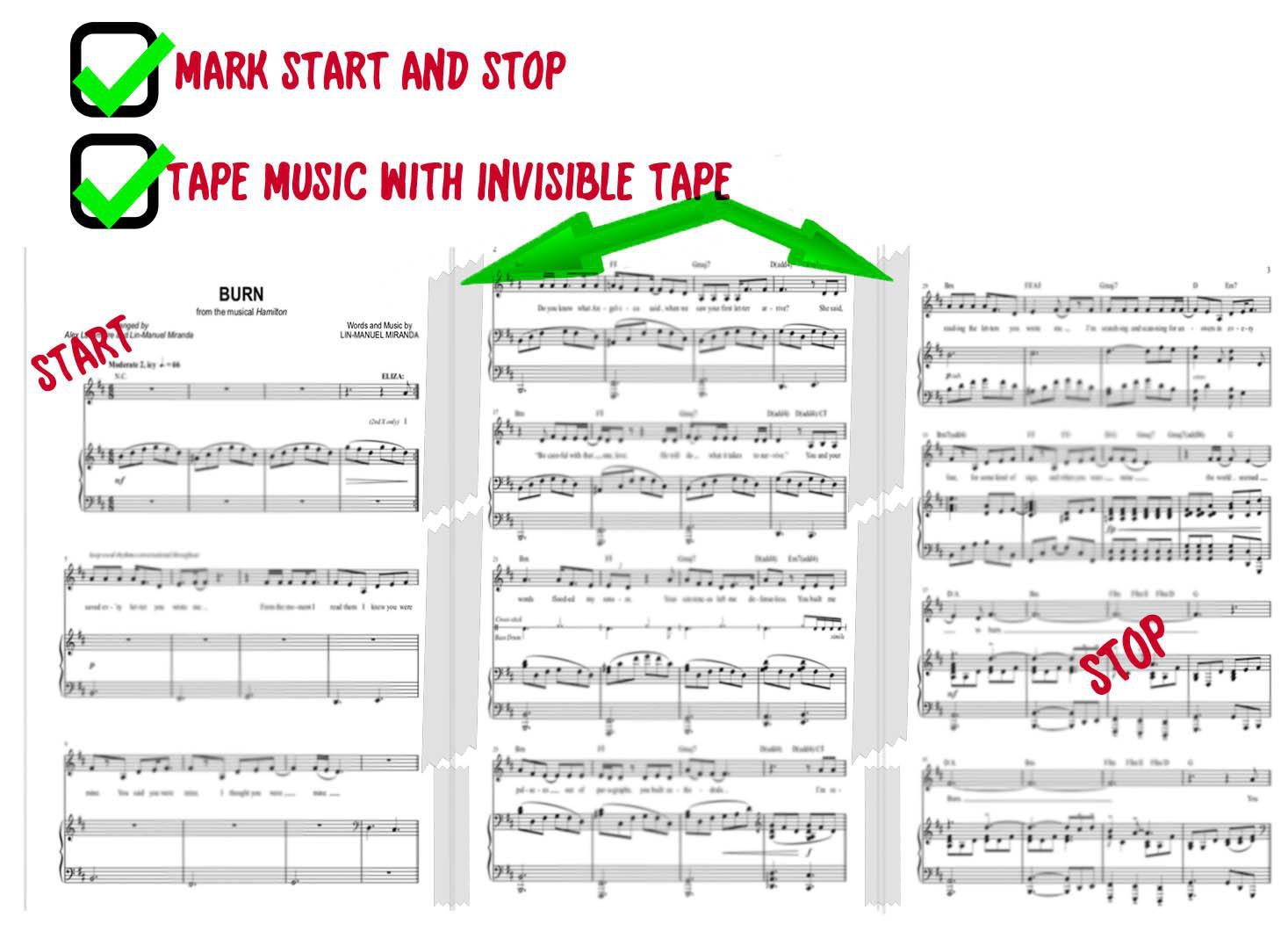
Mark your sheet music with the words START and STOP to clearly indicate where your song performance begins and ends
Make sure the sheet music is written in the same key you have rehearsed
Be prepared to communicate cuts and tempo to the accompanist
Use a 3-hole punch and place the sheet music into a 3-ring binder OR use scotch tape to tape your music like this example:
It is strongly recommended to schedule at least one rehearsal session with a pianist in your locality prior to your audition, especially if you learned your song from a recording. By rehearsing with a pianist, you can be sure the sheet music is written in the key you have rehearsed.
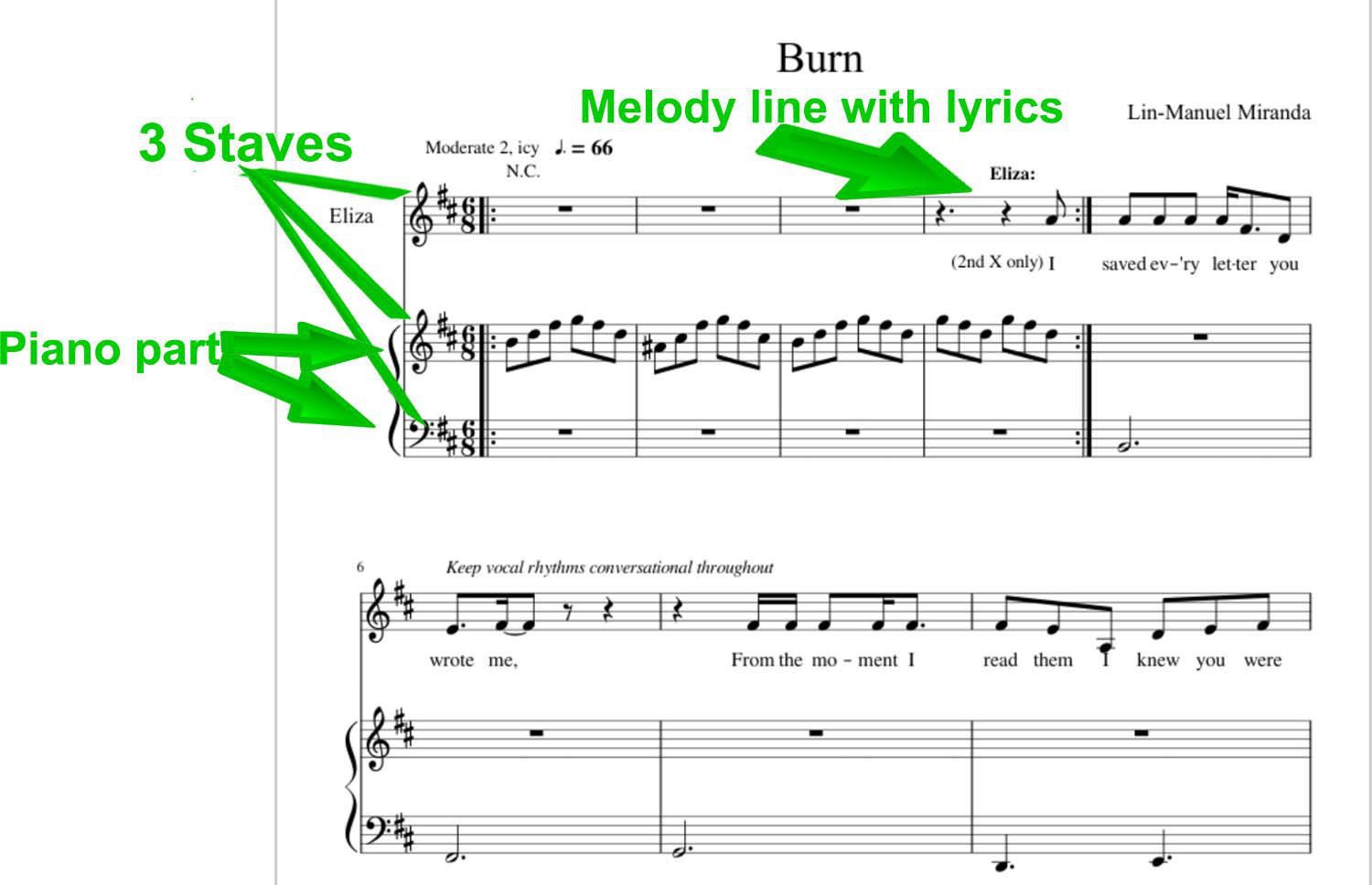
three staves
a legible melody line with lyrics
a piano part
It will look like this:
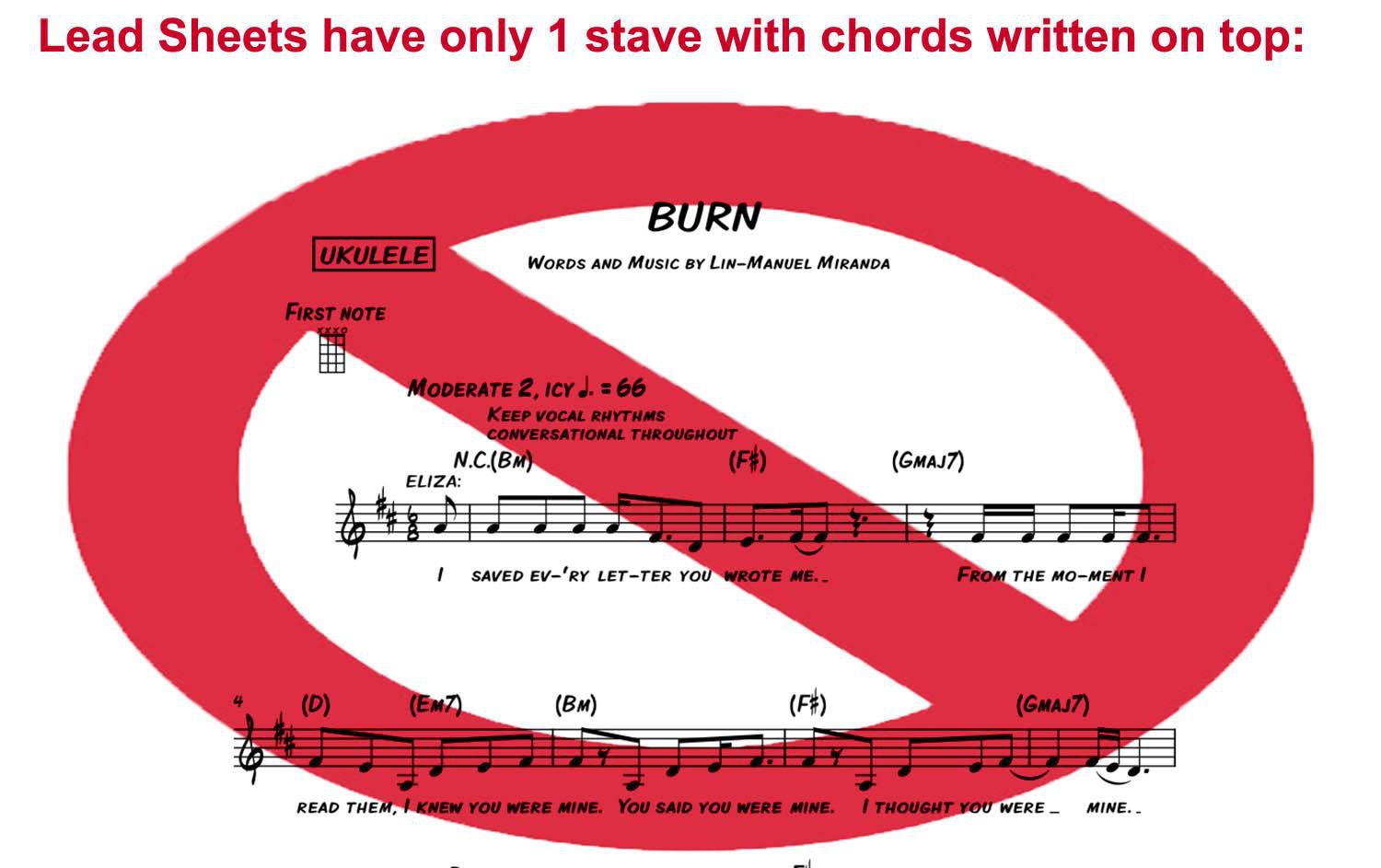
Do not use a lead sheet:
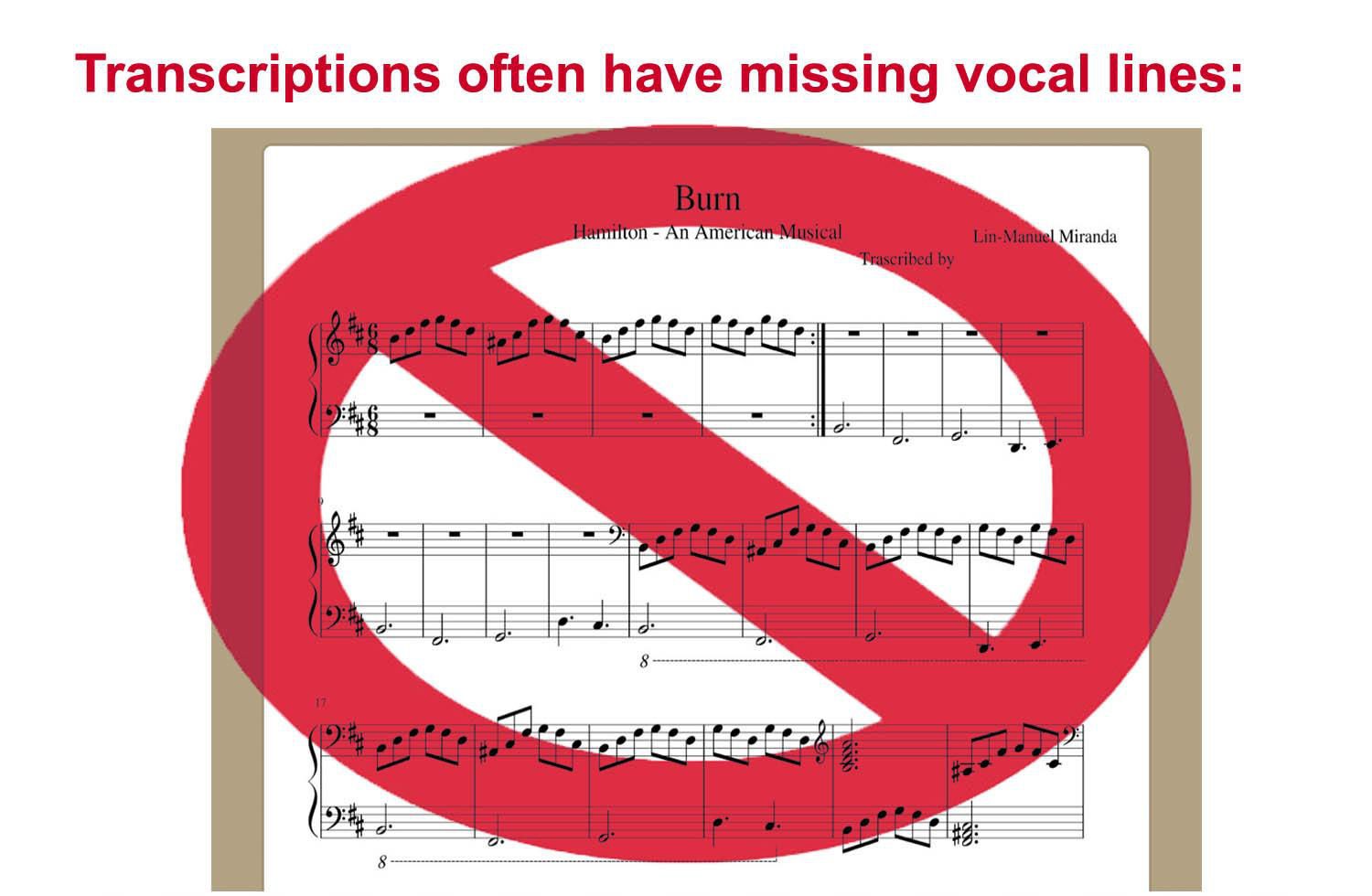
Do not use an incomplete transcription from the internet: